How to Help Your Students: A Resource for Classroom Teachers
Seating Preferences and Classroom Behavior
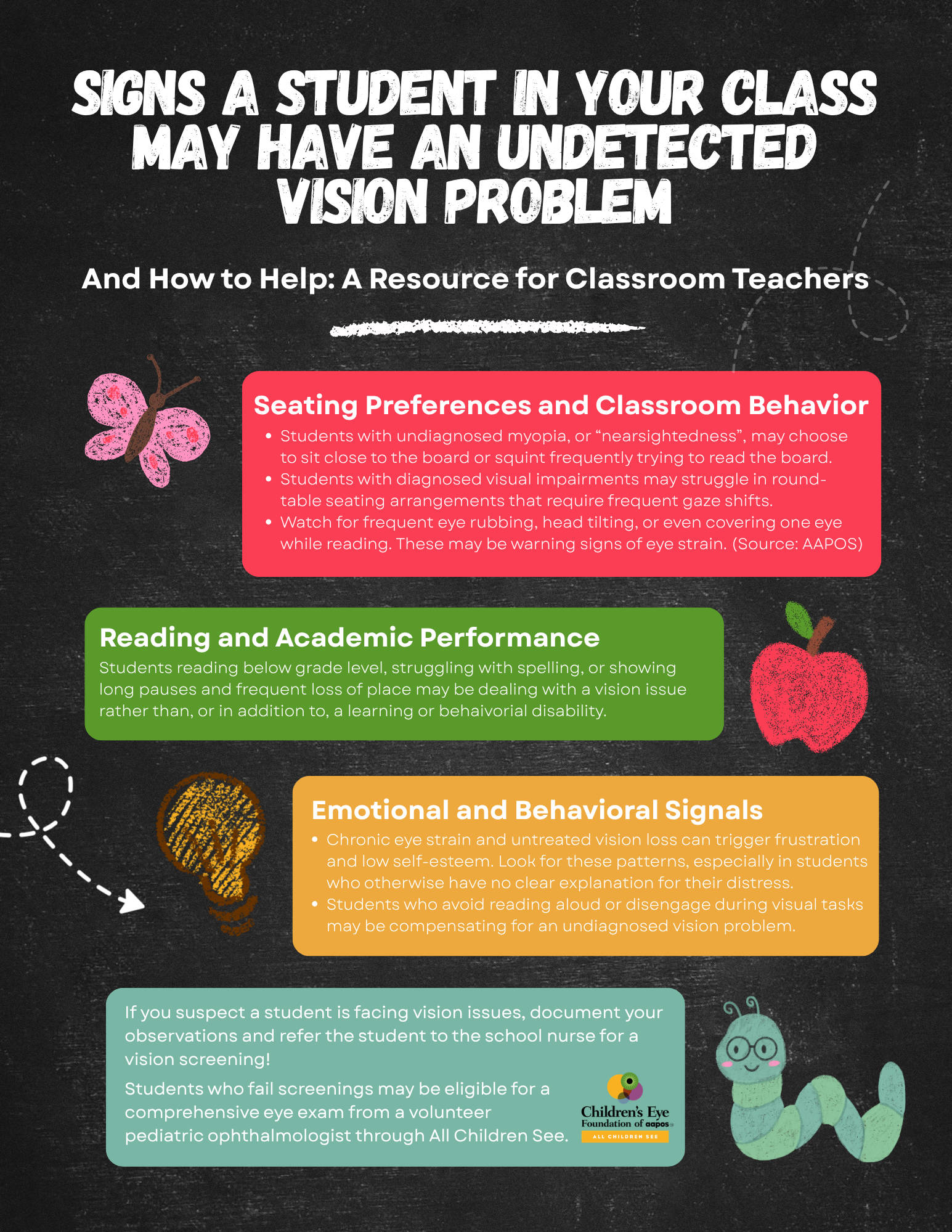
- Students with undiagnosed myopia, or “nearsightedness,” may choose to sit close to the board or squint frequently trying to read the board.
- Students with diagnosed visual impairments may struggle in round-table seating arrangements that require frequent gaze shifts.
- Watch for frequent eye rubbing, head tilting, or even covering one eye while reading. These may be warning signs of eye strain. (Source: AAPOS)
Reading and Academic Performance
- Students reading below grade level, struggling with spelling, or showing long pauses and frequent loss of place may be dealing with a vision issue rather than, or in addition to, a learning or behavioral disability.
Emotional and Behavioral Signals
- Chronic eye strain and untreated vision loss can trigger frustration and low self-esteem.
- Students who avoid reading aloud or disengage during visual tasks may be compensating for an undiagnosed vision problem.
Next Steps to Take
If you suspect a student is facing vision issues, document your observations and refer the student to the school nurse for a vision screening.
Students who fail screenings may be eligible for a no-cost comprehensive eye exam through the All Children See program, which connects uninsured and underinsured children with a pediatric ophthalmologist.
Learn More ABOUT THE PROGRAM
|
Download a printable version of this guide for your classroom.
DOWNLOAD YOUR FREE GUIDE
|